Francisco Gomez Paz

Awards

Born in Salta, Argentina in 1975. After obtaining the Industrial Design degree at the Universidad Nacional de Cordoba he moves to Milan in 1998 where he attends the Master in Design at Domus Academy.

Since opening his design oce in Milan in 2004 he has developed products for leading design companies such as Artemide, Driade, Danese, Lensvelt, Luceplan, Olivetti and Sector among others.

Francisco’s approach to design is driven by his own curiosity, the knowledge of technology and materials and a highly experimental hands-on creative process.

His work has received several international recognitions such as the Good Design Award 2010 and the Red Dot Award 2010; he has been honored together with Alberto Meda with the First Prize of the Index Award for the Solar Bottle, which has also been selected for the MOMA’s Study Collection and recently he received the Prize of Prizes to Innovation in Design from Italy’s president Giorgio Napolitano for the Hope chandelier and the prestigious Compasso d’Oro 2011.

He is active in the fields of research and education, he is visiting professor at Domus Academy from 2000 and has held lectures in Italy and abroad. His projects have been exhibited in several international events and published by main design publications.

Works and lives in Milan.

Projects

  • kyudo

    • Images
    • Project
    • Making of

    Client: Danese

    Year: 2013

    Kyudo –literally “the way of the bow” in Japanese- is an structural principle, a system of elements which combined create a robust and magical structure.

    Inspired in the simple and antique logics of the bow –which accumulates the energy generated by the tension and releases it suddenly on the arrow- Francisco uses this energy to create a system in balance, a group of elements in permanent tension that support each other in the space.

    The base of the system is an element that recalls metaphorically and functionally the bow- a simple metal tube bended according to a precise geometry designed to support tension- and a technical rope in Dyneema.

    The interaction of the arcs with the ropes create a lightweight structure, suspended in the space, which stability does not depend on a mechanical fixing but in the balance of opposed forces.

    The passage of the ropes inside the tubes is controlled by a polymer piece designed to blend seamlessly with the surface of the tubes, enhancing the mysterious way of the cords within the tubes. The ropes used can support higher forces than steel wires but have a smooth and soft touch.

    Kyudo can be easily disconnected and closed for transportation and storage, and the version with four arcs folds in itself.

  • illusion

    • Images
    • Project
    • Making of

    Client: Luceplan

    Year: 2013

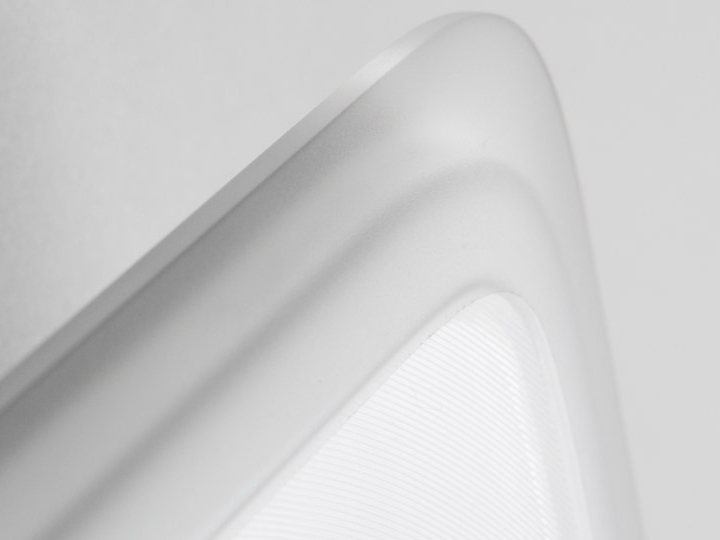
    Much slimmer than a traditional applique, Illusion features an important technical innovation: the first injected moulded Fresnel lens. The flat and compact die-cast aluminum body of the lamp appears to host a large illuminated sphere in it’s interior, which is the result of an optical effect, creating a surprising and intriguing object.
    Designed with an extreme attention to it’s details and material quality, it functions in indoor or outdoor settings.

  • nothing

    • Images
    • Project
    • Making of

    Client: Luceplan

    Year: 2012

    Nothing is a new generation lamp, the result of a three-years long process of research and experimentation with LED technology.

    Starting with the very own nature of LED, a tiny electronic element, so small to be almost anything, yet capable of making light. Francisco decided he wanted to interpret this minimum nature of the LED and his creative efforts where put in giving an answer to the question: if the first lamp ever was to be designed from LED technology, what would it be like?

    His answer came from a very simple idea: the first three-dimensional transformation of a printed circuit board. He designed the cuts, proportions and bending angles in the alluminum plate to which the printed electronic circuit was . Turning the idea in a product was a real challenge, to start with Francisco had to design not the final object but it’s DNA, the set of conditions and variables that would become the lamp body after the transformation process. Hundreds of prototypes, an intense process of trial and error and several manufacturing tests were nedeed to get to the final product.

    Nothing is a shadow, the minimum amount of materia needed to support both physically and technically the LEDs, a subtle shadow that projects light to the wall. Light is nothing.

  • synapse

    • Images
    • Project
    • Making of

    Client: Luceplan

    Year: 2011

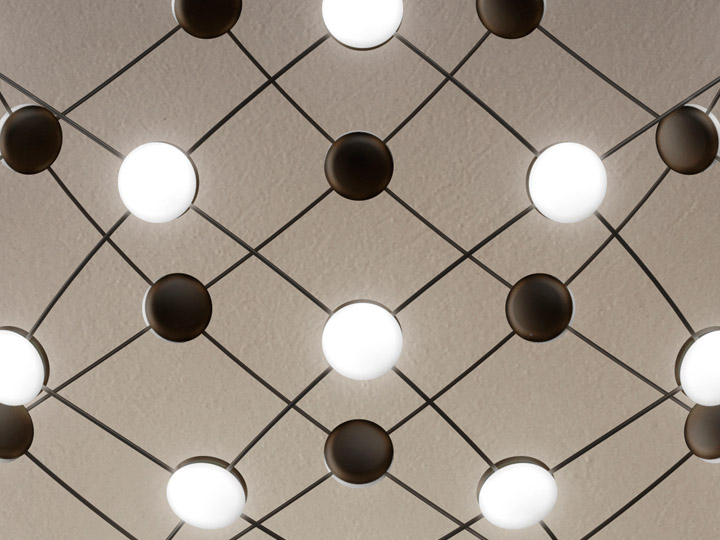
    A single module, a smart cell that combined with other smart cells creates illuminated surfaces of any size and composition.

    Each unit of the system embeds the necessary electric and electronic circuits so that it takes a simple gesture: connecting the modules into any configuration desired, to have an illuminating room divider or ceiling. No need for wires or exo-structures, each of the modules transmits electricity to the others by an extremely simple mechanical connection, the resulting surface is self structured and can be hang vertically or horizontally from the ceiling.

    The use of advanced RGB LED technology allows the light to be white or coloured.

  • hope

    • Images
    • Project
    • Making of

    designed with Paolo Rizzatto

    Client: Luceplan

    Year: 2009

    • Compasso d'Oro 2011
    • Premio Nazionale all'Innovazione 2011
    • Red Dot Award 2010
    • Good Design Award 2010

    Hope is a modern and innovative interpretation of the classic chandelier.
    The magical traditional chandeliers used the optical and physical qualities of the crystal of Bohemia and Venetian hand blown glass to multiply the light source into hundreds of smaller light points, creating unique and blissful atmospheres.

    Hope was born of a creative intuition, and evolved in a long process of creative and technological research in which we managed to transform the heavy and fragile crystals in an ultra light polycarbonate sheet capable of reproduce the outstanding optical qualities of solid glass.

    Based in the principles of the Fresnel lenses, we developed and engineered the moulded polycarbonate leafs, characterised by a glossy external surface and a textured internal surface treated with a series of concentric micro-prisms. The result is an extraordinary high quality plastic that I like calling “meta-crystal” because of its capacity to capture and refract light.

    Arranging the lenses around the light source to avoid the glare and ensure a good diusion of the light was an additional design challenge.
    The solution came out of a series of stems that hold and structure the “meta-crystal” leafs; these stems are then fixed to a light metal structure inspired in the shape of diatoms.

    All these creative and technological decisions have been studied to ensure the luminous eect, but also to facilitate the assembling and transportation of the product, in fact Hope fits a surprisingly small and light packaging.

  • josephine b.

    • Images
    • Project
    • Making of

    designed with Daniele Moioli

    Client: Artemide

    Year: 2007

    Josephine B. is a desk lamp that can assume countless positions and can rotate up to 180°.

    The base concept of Josephine B. is to expose the mechanism that generates the movement, unlike the majority of moving arms lamps where the mechanism is often hidden.

    Based in the idea of replacing the traditional parallelogram with a toothed belt, the friction forces are all concentrated and exposed in the vertical column that supports the lamp. The articulated mechanism develops a characteristic movement that dialogues with the user giving immediate feedback, and imprints to the product a subtle animalesque soul. Such a complex mechanism presented many challenges, not only technical and technological, but also creative.

    The final aesthetic of Josephine B. had to be innovative but not groundbreaking, we intentionally wanted to donate the lamp with a familiar, not too-aggressive look since the mechanism and the movement are already innovative and unexpected.

  • sarmiento

    • Images
    • Project
    • Making of

    Client: Danese

    Year: 2007

    Sarmiento is a shelf capable of disappearing behind the books that holds.

    It was conceived to put the books in the lightspot, enhancing their content. As a result the books stored, with their variety of colour and shape, create a flexible and never repeating fluid landscape. And Sarmiento hides behind. This effect is possible thanks to a small clever invention; the 20 degrees angulation of the shelf hosts the barycentre of different sized books in only 12 cm.

    The result is a light, small and almost invisible object.

  • solar bottle

    • Images
    • Project
    • Making of

    designed with Alberto Meda

    Year: 2007

    • Index Award 2007
    • Design and the Elastic Mind -Exhibition at MOMA New York
    • Well-Tech Award 2008
    • Scritture d'Acqua Award 2007

    Solar Bottle is a low-cost container capable of disinfecting water for people consuming microbiologically contaminated raw water; based in the SODIS (Solar Water Disinfection) system.

    The PET container has a dual face: a transparent face for maximum UV-A rays collection and a alluminium face that absorbs the infrared sunrays augmenting the temperature and improving disinfection.
    The reduced thickness assists the transportation and the storage. The handle integrates the angular regulation needed to improve sun exposure depending in which latitude of the world the process is executed.

    Together with Alberto Meda we have continuously developed Solar Bottle, achieving several milestones and taking the bottle to the pre-series status. For more info visit solarbottle.org

  • omero

    • Images
    • Project
    • Making of

    Client: Driade

    Year: 2006

    Omero is an unexpected three-legged magazine rack in mirror polished aluminium and stainless steel.

    Born out of the observation of the gesture of holding a magazine in the hand; the natural position of the fingers makes the magazines curve slightly, which structure and therefore facilitates the control of the movement and the weight.
    This subtle curve gave shape to a series of simple modular cones made of aluminium, which hold the magazines that fit perfectly and easily between the rings.

  • ovidio

    • Images
    • Project
    • Making of

    Client: Danese

    Year: 2005

    Ovidio is a table born out of a deep study of molded metal plate.

    Studying the details of the folding process and exploiting the potential of this simple technology to the maximum the object achieves a synthesis of the essentiality and richness of surface treatments. The result is a self-supporting geometric structure which becomes a form capable of changing according to the changes in point of view.

  • apero

    • Images
    • Project
    • Making of

    Client: Sumampa

    Year: 2004

    • special mention Design Report Award 2004

    Apero is a chaise longue entirely made by hand in the north of Argentina.
    The result of great experience but over all many reflections. And in some way the apex of personal restlessness, not only as a designer but as an inhabitant of a society increasingly saturated by objects and ever decreasing in values. Maybe the more important of these anxieties is that of finding a way to translate through an object a design concept, as an activity of great social impact.
    What is design if not an instrument capable of transforming ones own convictions into actions of cultural expression.
    The project is part of a research in collaboration with Sumampa, aimed at rediscovering the genuine value of a craft tradition from the north of Argentina, a region profoundly forgotten by the frenetic consumer market, forgotten by the map of progress. The hand made represents to these marginal zones the possibility to redeem social status. The possibility of a future in which to transmit ones cultural heritage.
    Apart from the enthusiasm for the creative process and the challenge of proposing new aesthetic values and functions, from the beginning of this experience there has been the conviction of design as a noble activity, of a social dimension that can not be put o, the discovery of new possibilities, the integration of fields and the recovery of traditions, the chance to give to those who don’t have by producing where no one has produced before. Apero utilises raw leather and the technology used for “aperos” (traditional saddle of the north of Argentina). The raw and damp leather is stitched over a steel structure. The drying leather submits high tension to the structure, which behaves elastically.
    The result is a mixed structure of remarkable rigidity.

Contact

Francisco Gomez Paz

Industrial Design

via Savona 123

Loft B007

20144 Milano


tel +39 02 48000655

info@gomezpaz.com

Press Contact

For press inquiries please contact press@gomezpaz.com

If you already have a password please login here

News & More

Milan Design Week 2013

08.04.2013 | admin | News

Looking forward to show you the new products for Danese and Luceplan in the upcoming Salone del Mobile 2013.

DANESE SHOWROOM
Piazza San Nazaro in Brolo 15, Milan
April 9-14 from 10.00AM to 9.00PM

LUCEPLAN EUROLUCE
Milan Fairground, Rho
Hall 13 / Stand B19 C18
April 9-14 from 9.30AM to 6.30PM

LUCEPLAN STORE
Corso Monforte 7, Milan
April 9-14 from 10.00AM to 8.00PM
PARTY April 9 starting at 7PM (SEE YOU ALL THERE!)

  • The making of Connecting the Dots

    02.05.2012 | admin | Ideas

    470 aluminum tubes + 164 3D sintered joints + 6 days + 6 people + 36 beers. In one and a half minute. Special thanks to: Jacek Jaskolski, Andrea Signoretto, Gimena Moya Tonelli, Eddy Donatini & Marco Armiraglio.

  • Connecting the Dots

    18.04.2012 | admin | News, Thoughts

    Nothing is a new generation lamp born from a gesture: the first three-dimensional transformation of an electronic circuit. To present it and the three-years long process of development I imagined an installation: Connecting the Dots. The installation is framed by …

  • Presenting Nothing

    17.04.2012 | admin | News

    After three-years of intense work Francisco is presenting his new lamp for Luceplan: Nothing. Exploring the nature of LED technology, a tiny electronic element -so small it’s practically nothing- yet capable of producing light. Nothing is born from a simple and …